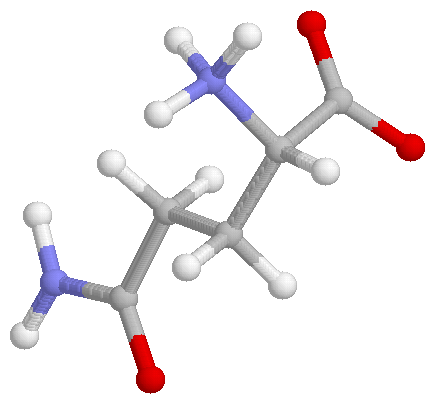
Glutamine, a nonessential amino acid, is an abundant protein building block found in both plants and animals.
Keyword:
blood brain barrier
Keyword:
body fuel
CAS registry number:
56-85-9
Citation of a publication:
Reference: Acta Crystallogr.,Sect.B, 29
(1973) p2571
Authors: T.F. Koetzle, M.N. Frey, M.S.
Lehmann, W.C. Hamilton
IUPAC name:
2-Amino-4-carbamoyl-butyric acid
Layman's explanation:
Glutamine was first isolated in 1932 from gliadin, which is protein common in wheat. In animals, glutamine is the only amino acid that can readily cross the blood brain barrier; accounting, perhaps, for 80% of the nitrogen in brain tissue. Even with the ability to cross the barrier, glutamine is not a neurotransmitter. Instead, it is a major fuel source for the body. The concentration of glutamine is about three to four times greater than all other amino acids in the blood. It is also ten to fifteen times more concentrated in cerebrospinal fluid than in the blood. Glutamine contributes to the biosynthesis of purines and pyrimidines, the two substances that make up a deoxyribonucleic acid (DNA) molecule. Excessive breakdown of glutamine can help cause infertility, depression, abdominal cramps, headache, weight loss, anorexia, and increased blood ammonia.
Lab name:
Common molecules
Sample provider:
Obtained courtesy of the Cambridge Structural Database
Reciprocal Net site software 0.9.1-50,
copyright (c) 2002-2009, The Trustees of Indiana University
Files and data presented via this software are property of their
respective owners.
Reciprocal Net is funded by the U.S. National Science Foundation as part of
the National Science Digital Library project.