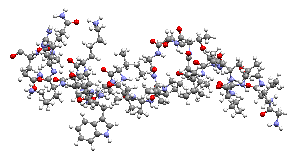
Melittin is a protein and the main active component of bee venom. The percentage level of its contents in bee venom is 50-60%. Melittin has a very strong anti-inflammatory and anti-bacterial effect. The protein has a small peptide with no disulphide bridge; the N-terminal part of the molecule is predominantly hydrophobic and the C-terminal part is hydrophilic and strongly basic. Recently, melittin peptides have been studied as potential toxins against prostate cancer. Also, antibody-melttin conjugates have been shown to selectively kill the tumor cells in vitro. Melittin may be fatal if it enters the bloodstream. It may cause allergic reaction (very low LD50s), which can act as a skin, eye or respiratory irritant. Melittin also helps to activate the body's adrenal glands, which causes one's own natural healing response. Many people that have multiple sclerosis (MS) use bee venom in order to help treat the disease.
Reciprocal Net site software 0.9.1-50,
copyright (c) 2002-2009, The Trustees of Indiana University
Files and data presented via this software are property of their
respective owners.
Reciprocal Net is funded by the U.S. National Science Foundation as part of
the National Science Digital Library project.