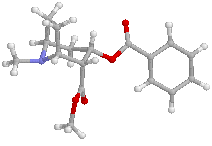
A strong central nervous system stimulant that enhances alertness and restrains appetite.
Layman's explanation:
Cocaine is a white crystalline powder that is prepared from the leaf of the Erythroxylon coca bush, which is grown in Peru and Bolivia. It was first identified by a German chemist named Albert Niemann in the mid-19th century, when it was initiated as a tonic/elixir in medicines to treat real or envisioned illnesses. The mechanism of action of cocaine is to block the reuptake of dopamine, an important neurotransmitter. Cocaine was used medically as a local anesthetic to perform eye, ear, nose, or throat surgery, although it has long since been replaced. Now, it is generally sold on the streets as a powder to be snorted in order to increase alertness and temporary feelings of pleasure.
Reciprocal Net site software 0.9.1-50,
copyright (c) 2002-2009, The Trustees of Indiana University
Files and data presented via this software are property of their
respective owners.
Reciprocal Net is funded by the U.S. National Science Foundation as part of
the National Science Digital Library project.