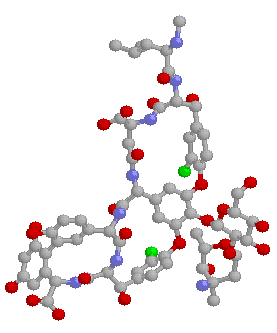
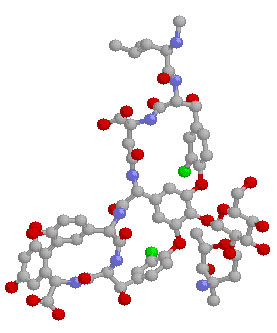
Reference: Nature (London), 271, (1978) p223
Authors: G.M. Sheldrick, P.G. Jones, O.
Kennard, D.H. Williams, G.A. Smith
Layman's explanation:
Vancomycin was developed over forty years ago in response to the growing penicillin-resistant bacterial strains. Because the antibiotic is quite powerful and is only administered via injection, it is often considered the last resort antibiotic. It was hoped that vancomycin would remain unresisted by bacteria, but, unfortunately, in 1987 vancomycin-resistant enterococci began to grow. Despite the resistance, vancomycin is still used today to treat severe infections in hospitalized patients. The mechanism by which vancomycin prevents bacterial proliferation is by inhibiting cell wall biosynthesis. Since the cell wall provides the mechanical support for the entire cell, without it, the cell cannot survive.
Lab name:
Common molecules
Sample provider:
Obtained courtesy of the Cambridge Structural Database
Reciprocal Net site software 0.9.1-50,
copyright (c) 2002-2009, The Trustees of Indiana University
Files and data presented via this software are property of their
respective owners.
Reciprocal Net is funded by the U.S. National Science Foundation as part of
the National Science Digital Library project.