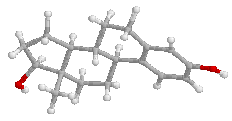
Estradiol is a steroid with two alcohol or hydroxy groups that is synthesized
by the ovaries, placenta, and testis. This chemical is the most potent of the mammalian
estrogenic hormones. This hormone is responsible for the development of
female sex organs, and it modulates the menstrual cycle. Estradiol slows the
breakdown of bones and is prescribed to women that do not produce estradiol.
Estradiol was found to reduce the risk of cardiovascular disease and to help with
the regeneration and preservation of nerve cells in the brain. Excess levels of
estradiol may be associated with a variety of adverse symptoms and poor health. It
has also been linked to cancer.
IUPAC name:
Estra-1,3,5(10)-triene-3,17-beta-diol
Citation of a publication:
B. Busetta, M. Hospital; Acta Crystallogr., Sect. B 28, (1972), 560
Lab name:
Common molecules
Sample provider:
Obtained courtesy of the Cambridge Structural Database
Reciprocal Net site software 0.9.1-50,
copyright (c) 2002-2009, The Trustees of Indiana University
Files and data presented via this software are property of their
respective owners.
Reciprocal Net is funded by the U.S. National Science Foundation as part of
the National Science Digital Library project.