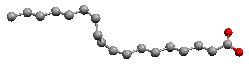
Linoleic acid is a polyunsaturated fatty acid occurring widely in plant
glycerides or fats. Common sources include many vegetable oils such as flax seed,
safflower, soybean, peanut, and corn; some margarines; and dairy fats. It is a colorless
to straw-colored liquid, insoluble in water, but soluble in alcohol and ether.
Linoleic acid is easily oxidized by air and is combustible. It also appears as an aluminum salt,
in the form of yellow lumps or powder, that is practically insoluble in water
but soluble in oils and fixed alkalai hydroxides. Linoleic acid is essential in human nutrition and is used also for soaps, animal feeds, paints, drying
protective coatings, emulsifying or smoothing and wetting agents, and in biochemical
research. The conjugated form of linoleic acid or CLA has been associated with health
benefits such as lowered risk of cancer and atherosclerosis. Prepared CLA is available
as a supplement. However, foods high in CLA content could be used.
Lab name:
Common molecules
Sample provider:
Obtained courtesy of the Cambridge Structural Database
Reciprocal Net site software 0.9.1-50,
copyright (c) 2002-2009, The Trustees of Indiana University
Files and data presented via this software are property of their
respective owners.
Reciprocal Net is funded by the U.S. National Science Foundation as part of
the National Science Digital Library project.